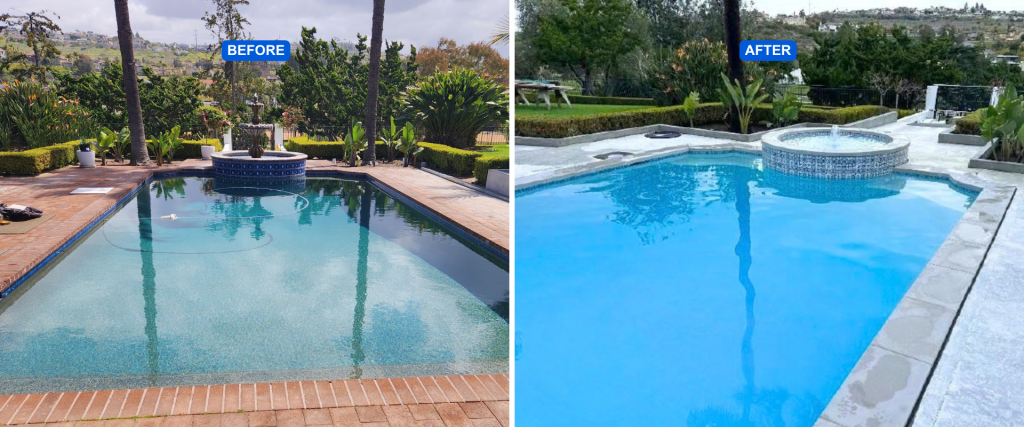
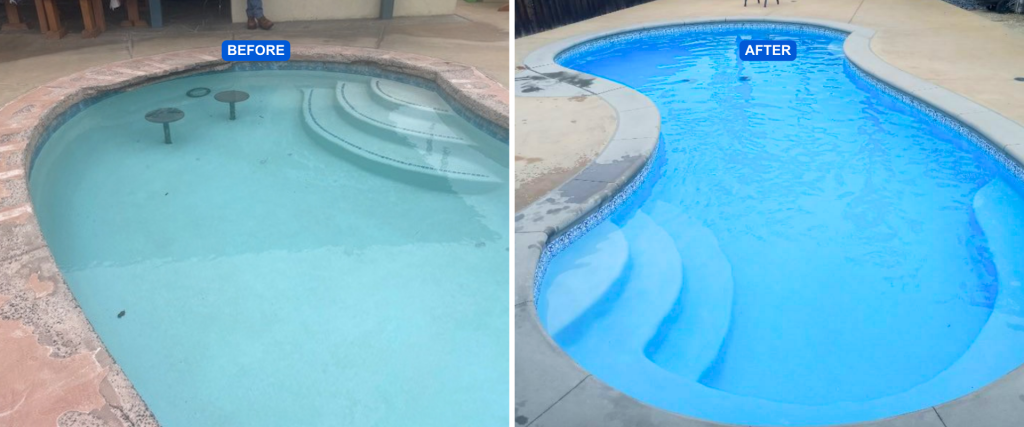
A pool replaster in Palm Desert is often driven by one unavoidable factor: the desert climate. Constant heat, intense sunlight, and year round UV exposure place more stress on pool plaster than many homeowners realize.
If your pool is beginning to feel rough, show discoloration, or require more maintenance than usual, the surface may be telling you it is time to consider resurfacing.
Why Palm Desert Pools Wear Faster
Palm Desert pools spend nearly every day exposed to direct sunlight.
Over time, UV rays gradually break down plaster surfaces, causing them to fade, weaken, and become more porous. Combined with high summer temperatures and changing water chemistry, the finish naturally begins to deteriorate.
Homes throughout Palm Desert, Indian Wells, Rancho Mirage, and surrounding desert communities commonly experience these conditions, making resurfacing an expected part of long term pool ownership.
Common Signs Your Pool Needs Replastering
Not every aging pool needs a complete remodel, but worn plaster should never be ignored.
Some of the most common signs include:
- Rough or abrasive surfaces
- Persistent staining that cannot be removed
- Visible etching or surface deterioration
- Small cracks or areas of delamination
- Difficulty maintaining balanced water chemistry
These symptoms often become more noticeable after years of exposure to extreme desert conditions.
Why Waiting Can Cost More
As plaster continues to deteriorate, the pool surface becomes more vulnerable to damage.
Small issues can eventually lead to larger problems that require more extensive work. Scheduling a pool resurfacing Palm Desert project at the right time helps protect the underlying structure while avoiding unnecessary long term expenses.
Replacing the finish before significant deterioration occurs is often the most cost effective approach.
Choosing a Finish Built for Desert Conditions
Material selection is especially important in Palm Desert.
Many homeowners choose pebble or quartz finishes because they offer greater durability than traditional plaster and perform better under intense UV exposure.
These finishes retain their appearance longer while providing increased resistance to staining and wear.
For homeowners planning to stay in their home for years, investing in a more durable finish often results in lower lifetime maintenance costs.
More Than Just a New Surface
Although replastering focuses on the interior finish, it is also an opportunity to evaluate the condition of tile, coping, lighting, and surrounding features.
Many Palm Desert homeowners choose to combine resurfacing with additional upgrades, creating a refreshed pool that not only performs better but also complements the rest of the backyard.
At Gardner, we help homeowners determine whether replastering alone is the right solution or if a more comprehensive renovation will provide greater long term value.
Work With a Palm Desert Pool Replaster Specialist
Desert pools require materials and installation methods that account for the unique climate.
Gardner has extensive experience completing pool replaster Palm Desert projects using finishes designed for long term durability and performance in harsh desert conditions.
View our recent resurfacing projects to see how a new finish can completely transform the look and lifespan of your pool.
FAQs About Pool Replaster Palm Desert
How often should a pool be replastered in Palm Desert?
Most pools require replastering every 10 to 15 years, although intense heat and UV exposure may shorten that timeline.
Why does desert weather wear out pool plaster faster?
Constant sun exposure, high temperatures, and changing water chemistry accelerate plaster deterioration.
What is the difference between replastering and resurfacing?
Replastering replaces the interior plaster finish, while resurfacing is a broader term that may also include upgraded materials like pebble or quartz finishes.
Is replastering worth the investment?
Yes. A new interior finish improves appearance, protects the pool shell, extends the life of the pool, and can reduce future maintenance costs.
Schedule Your Pool Consultation
The desert climate is tough on pool surfaces, but resurfacing at the right time can help protect your investment and extend the life of your pool. Whether you need a new interior finish or are considering a larger renovation, Gardner can help you determine the right solution for your backyard. Schedule a design consultation today to discuss your Palm Desert pool and start planning your next project.